What Is the Role of SIL Housing Providers in NDIS Support Plans?
The National Disability Insurance Scheme (NDIS) aims to provide support to Australians living with mobility issues, ensuring they have access to the services and accommodations they need to live independently. One essential component of the NDIS is Supported Independent Living (SIL), a program designed to support individuals with mobility issues in a way that promotes independence and autonomy in their daily lives. SIL housing providers play a critical role in making this possible, offering tailored housing and support services that cater to individual needs.
Understanding SIL Housing Providers
SIL housing providers in Kilsyth are organizations or services that offer accommodation and support for people with impairments who want to live independently. These providers are responsible for offering a variety of support options, such as assistance with daily living tasks, personal care, mobility support, and social inclusion. Through this support, SIL housing providers help individuals build skills and confidence, ultimately working towards greater independence.
SIL services are usually available as part of a broader NDIS plan, where the funding is allocated to support a person’s individual needs. SIL housing providers are integral in ensuring that the accommodation and services provided align with the goals set within a participant’s NDIS support plan. In return, this allows participants to live in a setting that suits their needs while receiving the necessary support to help them thrive.
The Role of SIL Housing Providers in NDIS Support Plans
Personalised Support Plans
One of the main roles of SIL housing providers in NDIS support plans is to tailor services according to the individual’s specific requirements. This means assessing a person’s needs in terms of daily living assistance, mobility, social inclusion, and even medical support. Whether it’s helping someone with cooking, cleaning, personal care, or accessing the community, SIL housing providers develop customised plans that focus on the individual’s goals and aspirations.
Accommodation Options
SIL housing providers offer a range of accommodation options to meet the different needs of participants. This could include shared accommodation with other NDIS participants, private accommodation, or even purpose-built homes that are accessible for individuals with various mobility issues. For example, a SIL accommodation provider in Melbourne may offer housing that is fully adapted for wheelchair users, ensuring that residents are comfortable and able to move freely within their living space. These options are designed to create a comfortable living environment while providing the support needed to encourage independence.
Independent Living Skills Development
One of the primary objectives of SIL housing providers is to help residents develop independent living skills. By providing support with daily tasks like budgeting, grocery shopping, and personal hygiene, these providers ensure that participants can live more autonomously. SIL Housing Providers in Kilsyth, for instance, may have specialists who help individuals learn how to manage their time and make decisions independently, empowering them to live more fulfilling lives.
Health and Well-being Support
In addition to daily living assistance, SIL housing providers offer health and well-being support tailored to the needs of each individual. Whether it’s medication management, mental health support, or regular health check-ups, SIL providers ensure that participants’ health needs are met in a safe and supportive environment. This contributes to an overall sense of well-being and helps participants maintain a better quality of life.
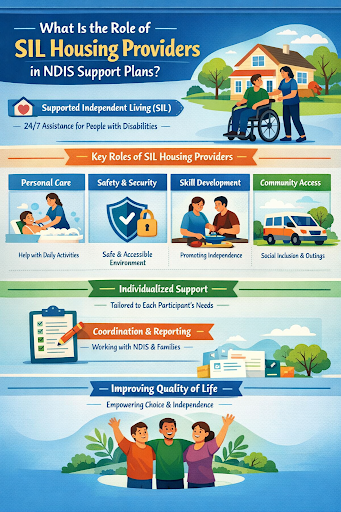
Community and Social Inclusion
SIL housing providers play a significant role in fostering social inclusion and community engagement. By supporting individuals in accessing community events, social activities, and public spaces, these providers help break down barriers to participation. This is a key part of NDIS plans, as inclusion in the wider community is essential for the personal growth and development of people with mobility issues.
SIL Housing Providers are essential partners in the NDIS support plan, offering the services and accommodation needed for individuals with mobility issues to live independently. By providing personalised support, suitable accommodation, and opportunities for skill development, SIL providers help individuals thrive and reach their full potential. Whether you’re looking for a SIL accommodation provider in Melbourne, finding the right support is key to achieving a fulfilling and independent life.
At Accessible Living Homes, we are dedicated to providing tailored SIL housing and support services that help individuals with mobility issues live independently while receiving the support they need. Contact us today to learn more about how we can help you or your loved ones achieve greater independence through NDIS SIL support.
Book An Appointment Today
Ready to take the next step in independent living? Contact Accessible Living Homes today to explore our SIL housing options and tailored support services in Melbourne and Kilsyth.
Call us at 1800 53 1424 or email us at [email protected] for more information.
How do SIL housing providers support NDIS participants?
SIL housing providers offer tailored accommodation and support services to assist individuals with disabilities. They help develop personalised plans for daily living support, skills development, and community engagement, based on the goals outlined in the NDIS participant’s plan.
What types of accommodations do SIL housing providers offer?
SIL housing providers offer various accommodation options, including shared accommodation, independent living units, and specialised homes adapted to meet specific disability needs, such as wheelchair access or accessibility features.
How do SIL housing providers help with daily living tasks?
SIL Housing Providers assist with activities such as cooking, cleaning, personal care, transportation, and grocery shopping, helping individuals gain the skills needed to live as independently as possible.
Can SIL housing providers help with social inclusion?
Yes, SIL housing providers support individuals in accessing community activities, social events, and local resources, promoting social inclusion and enhancing the participant’s social connections and sense of belonging.
What is the difference between SIL housing and group homes?
SIL housing provides personalised support in various accommodation settings, often in smaller groups or individual units. Group homes typically house multiple individuals in a single location with shared support services, while SIL options can be more flexible and tailored to individual needs.
How does a SIL housing provider work with NDIS funding?
SIL housing providers work in partnership with NDIS to ensure that a participant’s accommodation and support services are funded through their NDIS plan. The funding is allocated to help individuals live independently and receive the necessary support to meet their goals.
How can I find an SIL housing provider in my area?
To find a suitable SIL housing provider, search for providers within your local area or ask your NDIS planner or support coordinator for recommendations. You can also look for providers in specific locations, such as SIL housing providers in Kilsyth or a SIL accommodation provider in Melbourne.
Are SIL housing providers responsible for health and medical support?
While SIL housing providers offer support with health-related tasks, such as medication management or health appointments, they typically do not provide direct medical care. Medical needs are usually handled by other healthcare professionals in collaboration with the SIL provider.
How do SIL housing providers help with developing independent living skills?
SIL Housing Providers focus on helping individuals develop skills such as budgeting, time management, personal hygiene, and decision-making, aiming to increase the participants' independence and prepare them for a more self-sufficient life.